This article was originally published on EcoTeq which is now proudly under the banner of Conquest. We’ve recently rebranded, bringing the same high-quality products, same experienced team, and same nationwide service guarantee together under one name to deliver even more value.
Rechargeable batteries are all around us. They power our devices, vacuums, tools and electric vehicles. But despite their presence, there are a myriad of myths and misconceptions surrounding battery technology, especially lithium batteries used in commercial applications such as outdoor maintenance and cleansing equipment that can make us sceptical about adopting them.
Battery types
There are many different types of batteries available for varied purposes and applications. For most commercial applications, lithium-ion batteries are the technology of choice. But not all lithium-ion batteries are the same. In fact, there are 6 major types of lithium-ion batteries, however due to performance vs cost only 2 are suited to commercial vehicle applications.
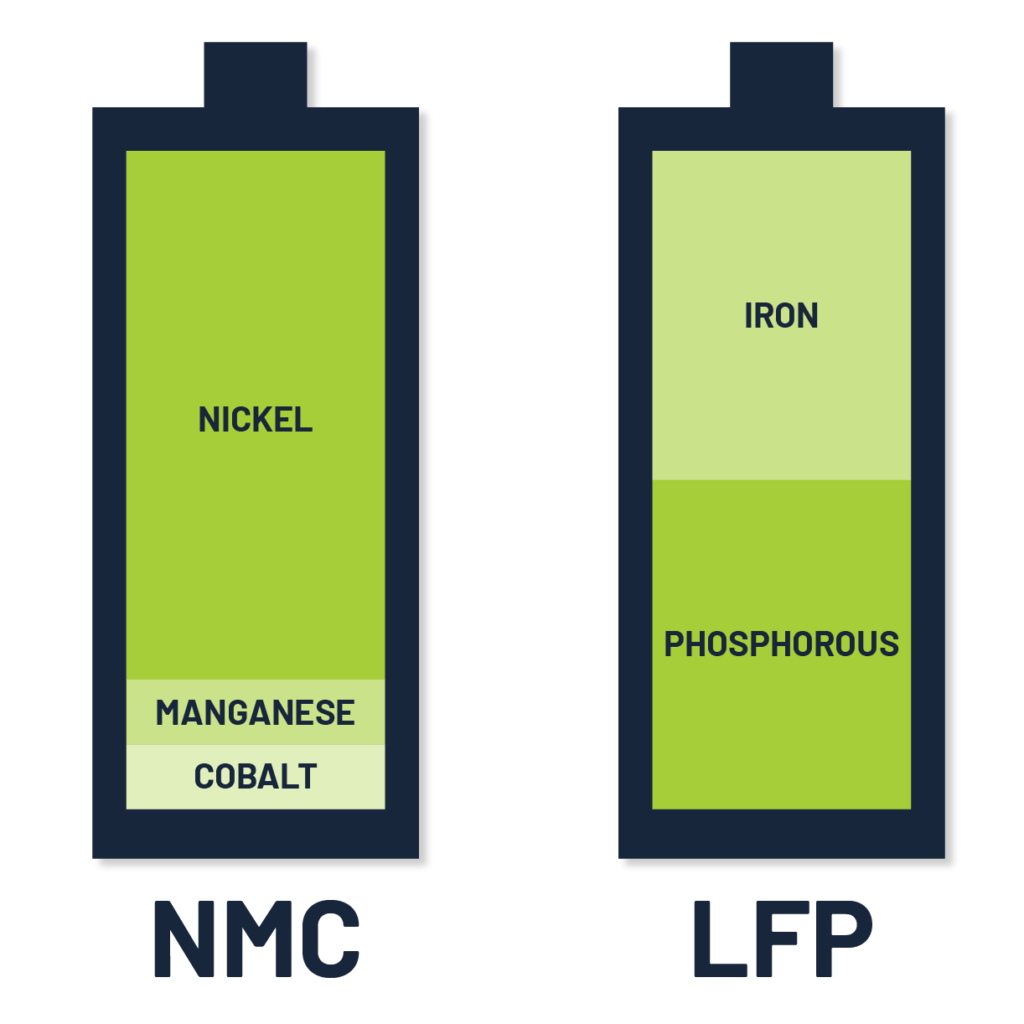
The two most common lithium-ion batteries used in commercial equipment are:
- lithium ferrous phosphate (LFP)
- nickel manganese cobalt (NMC)
Knowing the distinctions between these battery chemistries helps understand battery applications, their performance and longevity.
LFP batteries
LFP are the cheaper of these lithium-ion batteries. They are very commonly used in short range EVs. Due to their chemistry, they are a very stable battery, which allows for extremely fast charge and discharge. They have a very high ‘specific power’, which can translate to faster acceleration in EVs. LFP batteries are very durable, resistant to fire and have very little ‘memory’, even when used to 100% depth of discharge.
NMC batteries
An NMC lithium-ion battery is a lot denser, providing up to 50% more ‘specific energy’ per kilogram when compared to the LFP battery. This means while the ‘specific power’ is often around 20% lower, these batteries have a lot higher range. NMC batteries are less stable than LFP batteries, meaning a slower charge and discharge rate is preferable for maintaining quality and performance. These batteries are becoming increasingly popular in commercial vehicle applications due to their superior performance.
Both types of batteries have their place in the market, catering to differing needs and preferences.
Common battery myths
Here are a few common myths surrounding lithium-ion battery technology:
“You need special charging infrastructure.” For NMC battery applications like Conquest’s full range of mowers, you don’t need to upgrade to 3-phase power. These mowers will charge from a regular power point. However, for sweepers with LFP batteries, they will need 3-phase power. But most councils already have these charging capabilities installed for their larger equipment like welders.
“Batteries lose power as they get closer towards their end of charge.” No, this doesn’t happen with lithium batteries. Think of an electric drill or cordless vacuum cleaner. When it stops working, it stops working. It doesn’t slow down first.
“Cell failure means battery failure and that’s expensive.” A lithium-ion battery has 9 or 13 cells, depending on the size of the battery. If a single cell fails, it can be replaced, which is a fraction of the price of a new battery.
“Batteries produce too much heat.” While the charger will get warm and the cable to the battery will get warm while charging, batteries themselves are not hot. While operating, batteries will not get hotter than the ambient temperature, ensuring safe operations, even over long hours.
Myths about battery run times
Misconception 1: “I won’t get a full day of work out of battery-powered equipment.”
A common misconception is that outdoor maintenance and cleansing equipment will run out of charge before a shift is done.
The batteries used in Conquest’s range of equipment are designed to power through a full shift, with no interchanging or mid-shift recharge breaks required.
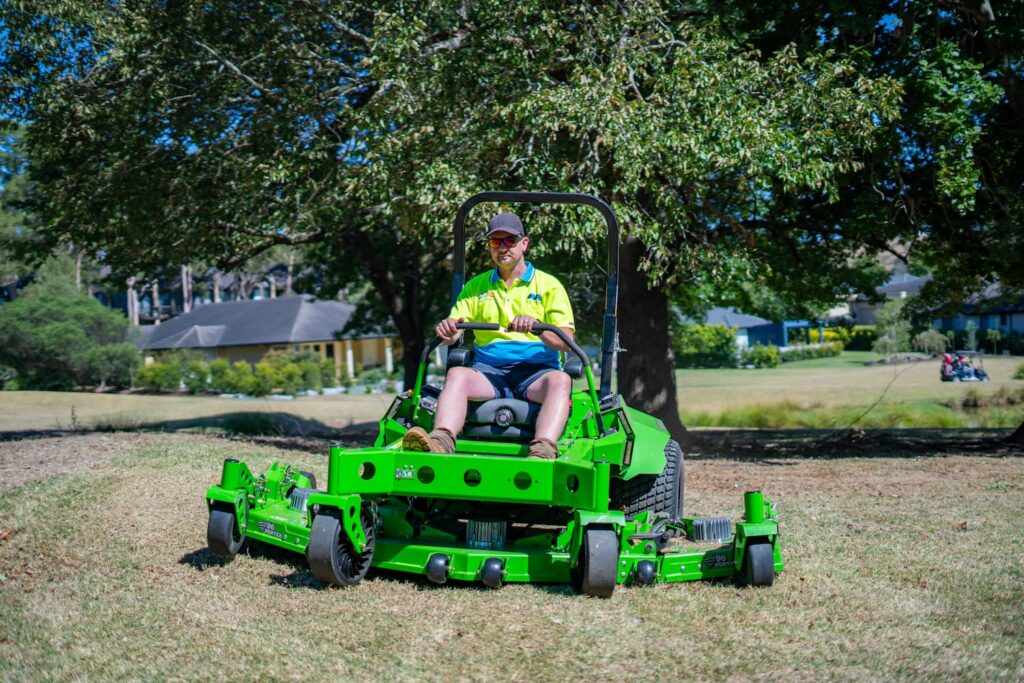
Thinking in terms of shift coverage is the best way to approach battery run times. The Nemesis electric mower for example, will achieve 4 hours of cutting time. This is the perfect solution for operators who dedicate part of their work shift to other landscape maintenance tasks. However, larger electric mowers, as well as Conquest’s range of compact sweepers, deliver a full day’s work on a single battery charge, with sufficient charge remaining at the end of the shift to return to home base.
When thinking about shifts, the focus is typically on the cutting or cleaning time. But it’s important to remember that a typical day on the job also includes briefings, breaks, travel to site, and time spent loading and unloading equipment. Over a full 8-hour shift, neither an electric nor an equivalent diesel-powered mower will be cutting 100% of the time.
Myths about battery lifespan
Misconception 2: “My diesel equipment will last longer than an electric equivalent.”
Battery lifespan, much like any internal combustion engine, is subject to usage patterns and environmental conditions.
Many misconceptions around battery life are born from lead acid batteries and their shorter lifespans. Technology with lithium batteries has evolved to such a point where batteries will now regularly outlast an internal combustion engine (ICE).
LFP batteries are very long lasting in most environments, except for extreme colds. They are also the most stable battery in heat, with the thermal runaway point at around 270°C. They will typically last around 3,000 deep discharge cycles, even when fast charging systems are used. In a 5-day working week, this will translate to more than 11 years of efficient use!
NMC batteries need a little more care due to the higher energy density in a smaller cell. However, they are a lot less affected by extreme cold operating temperatures. When using a lower amperage charger, the NMC batteries will also last a long time. In fact, in many commercial maintenance machines, batteries are reaching more than 10,000 hours of operation.
Myths about battery efficiency
Misconception 3: “My ICE equipment is more efficient than an electric equivalent.”
Efficiency of battery electric vehicles extends far beyond the battery itself.
Machines designed electric from the ground-up are generally designed with efficiency in mind, which often involves reducing operating friction, reducing air and ground resistance, and where possible, a lighter build than their diesel counterparts.
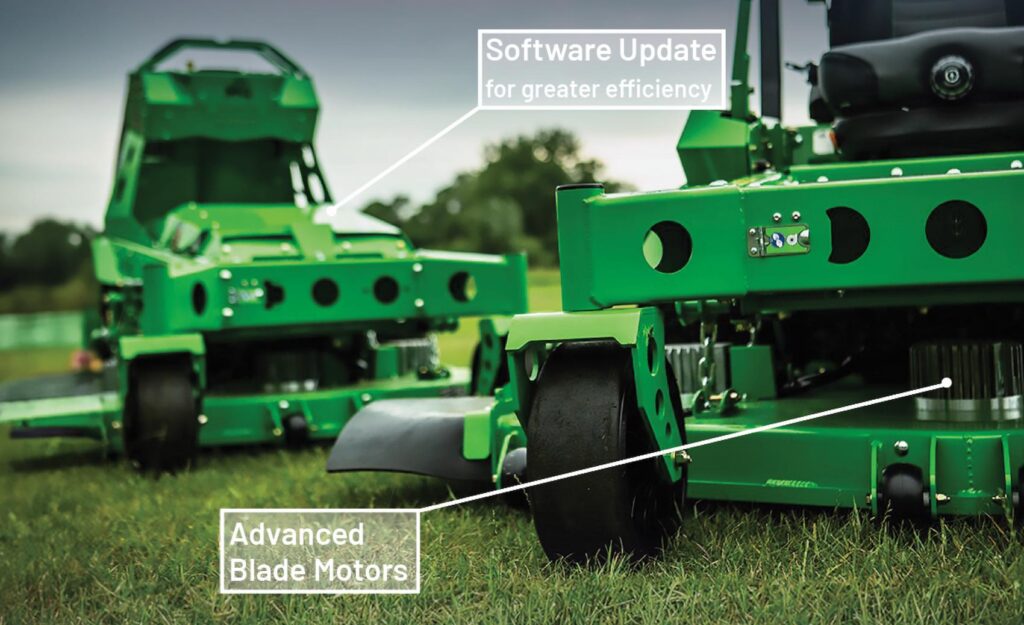
As an example, Conquest’s NMC lithium mowers machines are made with aircraft alloy, which is known for its strength-to-weight ratio, durability and structural integrity. They also have no grease points and no belts, with everything running on direct drive electric motors and sealed bearings.
Most commercial electric mowers also feature controllers that allow for the most efficient amperage draw, depending on the length of the grass. They will power up when the grass is longer and thicker, but they run at low amps through regular grass, ensuring optimum battery and power usage. The shorter and lighter blades on a Conquest mower also require less energy to maintain tip speed than longer and heavier blades on an equivalent diesel machine, further optimising performance.
Mean Green, the manufacturer of Conquest’s electric mowers, has been trying and testing batteries to optimise their machines for performance for more than a decade. They have fine-tuned their designs to minimise energy wastage and maximise performance.
Sweepers that have been designed and built as electric from the ground up are similar. Due to having electric direct drive and suction fan motors, they increase efficiency by over 30% when compared to battery sweepers that still utilise their diesel family’s hydraulic operating system.
Myths about battery chemistry and safety
Misconception 4: “Batteries aren’t safe and will probably catch on fire.”
Safety is paramount.
Understanding the causes of battery fires is key to mitigating risks. Certain scenarios can create a fire risk, such as:
- Excessive heat,
- Direct sunlight,
- Exposure to fire or open flames,
- Lack of ventilation,
- Over charging or deep discharging,
- Excessive impact, piercing or tampering.
However, some batteries are more tolerant than others. Due to their chemistry, the LFP battery is the most stable and resistant to fire. They will rarely catch fire, even when pierced or damaged in a way that would cause other batteries to explode.
NMC batteries require a little more diligence on the part of the equipment manufacturer to mitigate the risks of a fire. Even so, there have been very few cases of thermal runaway with commercial vehicles and equipment due to the battery knowledge most manufacturers have.
When considering the risks involved with Lithium batteries, it is important to remember the risks we accept as normal when handling highly flammable fuels and the flammable vapours they produce, as generally the risk batteries present is only to the same level or even less with the right knowledge and practices.
Myths about environmental impact and sustainability
Misconception 5: “Batteries are terrible for our planet.”
With concerns about climate change and environmental sustainability being brought to the forefront of many businesses and organisation’s minds the scrutiny of battery technology has increased.
While batteries offer a cleaner alternative to traditional fossil fuels, their production and disposal practices can raise valid concerns. From mining raw materials to recycling end-of-life batteries, every stage of the battery lifecycle has environmental implications.
Conquest’s lithium batteries can undergo a rigorous recycling process with up to 95% of materials recovered for reuse. This helps minimise the need to extract raw materials and reduces landfill.
There are already two battery recycling plants operational in Australia, and as the demand for battery recycling in Australia increases, more facilities will be built to meet that demand.
While mining for the raw materials used in a battery-powered machine might have a more negative impact on the environment than drilling for fuel, a battery-powered machine will produce zero carbon emissions during its lifetime of use. The whole lifecycle from ‘cradle to grave’ must be considered.
Lean more about battery technology
If you have any concerns about our battery technology, you can simply contact Conquest and we will be happy to answer all your questions. We can also provide an on-site demonstration so you can see our electric cleaning equipment or mowers in action and see how they stack up against traditional petrol or diesel powered alternatives.