This article was originally published by EcoPower, now proudly integrated into Conquest. By combining our expertise, we deliver best-in-class electric industrial cleaning, maintenance, and transport solutions, all backed by nationwide servicing, expert support, and a single trusted name.
As commercial businesses become more conscious of environmental impact and operational efficiency, electric carts are gaining popularity across various sectors shifting from simple golf carts to essential workplace assets.
Whether transporting personnel across university campuses, moving heavy pallets within manufacturing facilities, or servicing guests at luxury resorts, electric utility vehicles (UTVs) offer numerous benefits in both commercial and recreational settings. This comprehensive guide will explore the different types of electric carts available, their critical uses and benefits for businesses, their price points, and how to choose the right one for your business needs.
What is an Electric Cart?
Electric carts or UTVs are battery-powered utility vehicles that offer efficient, environmentally friendly transportation across commercial, industrial, and recreational properties.
Unlike petroleum-powered golf carts, these vehicles rely on high-efficiency electric motors to ensure smooth, quiet operation with zero emissions, making them increasingly popular for navigating vast outdoor spaces and indoor venues.
Definition and Overview
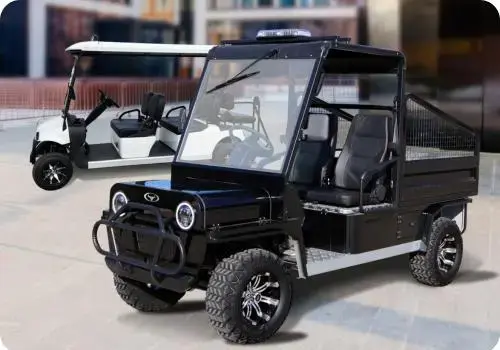
An electric golf cart typically consists of a lightweight frame or chassis board, an electric motor, and a battery (generally Lithium-ion), all working together to deliver reliable transportation. These electric carts come in various models, ranging from simple two-seaters to industrial carts designed for heavy-duty tasks.
Due to their versatility, electric carts can be used in various environments, including golf courses, industrial plants, recreational areas, and even urban spaces.
Key Features of Electric Carts
Electric carts have many features that make them ideal for various uses. Some of the most commonly used carts and cart features include:
- Electric Motor: Provides quiet, efficient operation with zero emissions.
- Battery-Powered: Runs on rechargeable batteries, typically offering a range of 30-80 kilometres per charge.
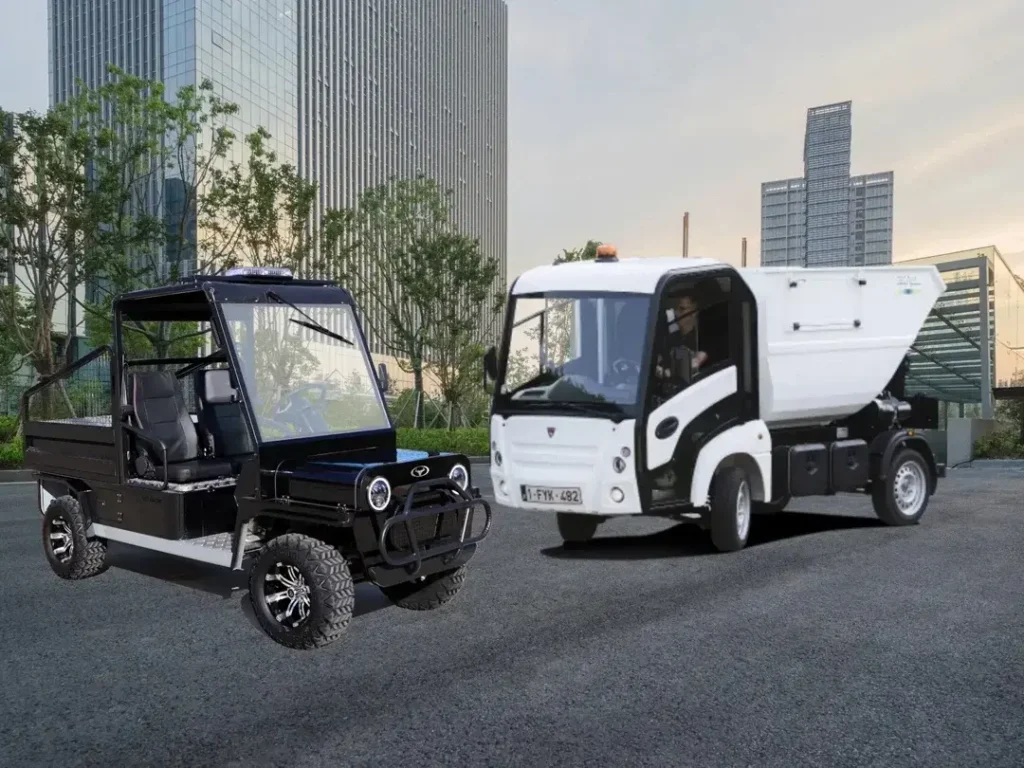
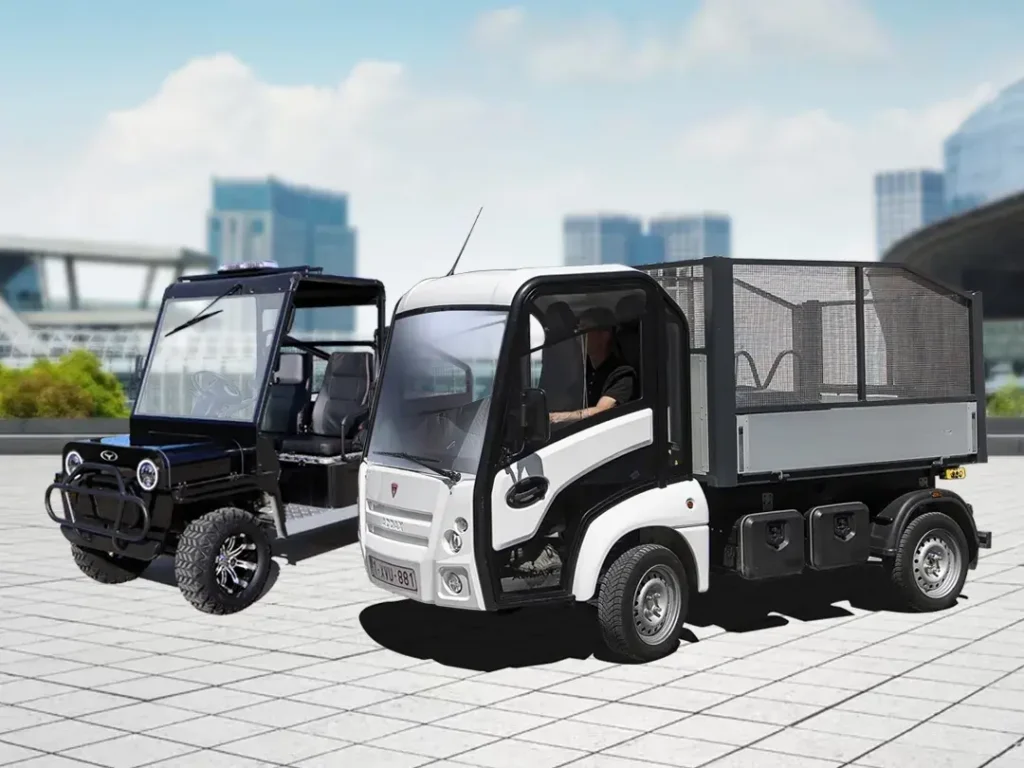
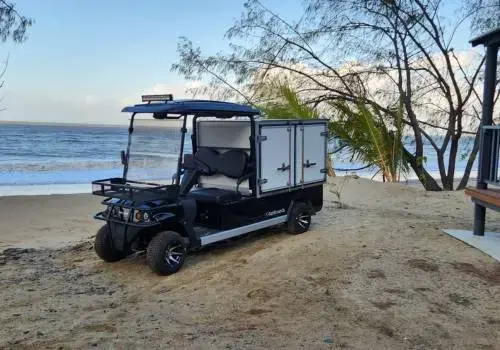
- Customisable Options: Models can usually be customised with add-ons like utility beds, storage compartments, waste collection and additional seatings to suit users’ needs.
Types of Electric Carts
Electric carts come in various product types, each designed to meet specific needs. The most common cart types include golf, industrial, and recreational.
Explore each cart type to understand its features set, price, and applications.
Golf Carts
Golf carts are perhaps the most well-known type of electric cart.
Designed primarily for use on golf courses, these carts are built for smooth terrain and can carry anywhere from two to six passengers. With comfortable seating, easy handling, and low speeds, they offer a quiet and eco-friendly way to travel across the course.
However, modern electric golf carts have expanded their use beyond the golf course, now often used in retirement communities, caravan parks, resorts, and large campuses.
Industrial Carts
Industrial electric carts are built for heavy-duty applications, transporting heavy loads in warehouses, factories, and construction sites.
These vehicles are designed to offer higher torque and load capacities to handle industrial-grade tasks. Safety features, such as reinforced chassis and braking systems, are often included to ensure safe operation in demanding environments. Quiet, zero emission operation further promotes user safety while navigating enclosed warehouses, preventing hazardous fume build up or loud echoing noises.
Recreational Carts
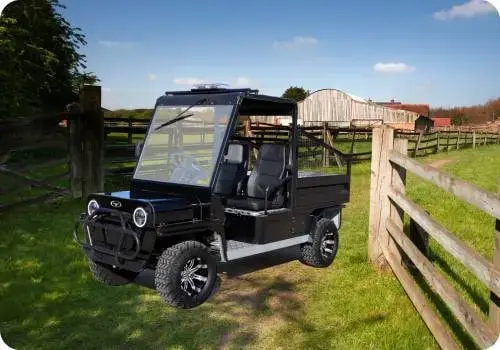
Recreational carts balance utility and enjoyment and are designed for personal or light-duty commercial use. These UTVs are engineered to navigate diverse terrain with ease, while ensuring user comfort and safety with quiet operations and ergonomic features.
Ideal for parks, large residential properties, and rural settings, these carts are often customisable to include additional comfort features like enhanced seating and audio systems.
Key Uses for Electric Carts
Electric carts are resourceful, serving both commercial and recreational purposes. Depending on your needs, these carts can significantly enhance productivity or offer a comfortable, enjoyable, and sustainable mode of transportation.
Commercial and Industrial Use
Electric carts are vital in commercial and industrial sectors, including facility management, health, and aged care. They provide a safe and efficient way to transport tools, employees, and supplies over short distances, making them a cornerstone in productivity enhancement.
Recreational and Personal Use
Recreational carts are popular in communities, resorts, caravan parks, and large residential properties, offering a fun and convenient way to get around.
Whether you’re exploring a park, navigating a large campus, or just enjoying a day outdoors, electric carts provide the ultimate choice for an enjoyable and environmentally friendly mode of transport that suits various leisure activities and play.
Benefits of Choosing Electric Carts
Switching to electric carts offers users the ultimate choice with many benefits, ranging from environmental advantages to cost savings, safety, and reliability.
Let’s explore why electric carts are increasingly becoming the standard and preferred choice for businesses.
Environmental Impact
One of the most significant benefits of electric carts is their positive environmental impact. They produce zero emissions, helping businesses reduce their carbon footprint associated with on-site transportation. This makes them ideal for green, eco-conscious businesses and individuals aiming to minimise environmental impact.
Cost Savings and Maintenance
Electric carts are more cost-effective over the long term than petroleum or diesel-powered vehicles. They are cheaper to run due to lower fuel costs (since they use electricity instead of gasoline) and require less maintenance.
Electric motors have fewer moving parts than combustion engines, meaning they are less prone to wear and tear, saving you money on repairs and maintenance and minimising downtime. These savings on fuel and upkeep can be substantial throughout the vehicle and motor’s life.
Performance and Reliability
Electric carts are known for their reliable performance. They have electric drivetrains that reduce the mechanical complexities of traditional engines, resulting in fewer maintenance needs and longer vehicle life.
Advanced battery management systems and regenerative braking also enhance efficiency and operational continuity, helping fleet operators minimise downtime and optimise performance long-term.
This reliability, combined with sustainable energy use, makes electric utility vehicles ideal for companies seeking long-term productivity, cost savings, and environmental compliance.
Electric Carts vs. Petrol-Powered Carts: Which is Right for You?
Performance Comparison
While petrol-powered carts may offer slightly higher speeds and more torque for challenging terrain, electric carts provide a smoother, faster, quieter experience, especially for everyday use.
Electric carts excel in golf courses, resorts, commercial and industrial facilities, and urban areas, where noise and emissions from motor use can be disruptive and a serious safety concern.
Long-Term Cost Analysis
Although electric carts may have a higher upfront cost, they generally offer significant savings over time. Electric carts with lower fuel and maintenance costs can become more economical after a few years. On the other hand, petrol-powered carts incur continuous fuel expenses and need more frequent maintenance.
Environmental Considerations
Electric carts are ideal for businesses and individuals aiming to reduce their carbon footprint. Their zero-emission operation aligns with the growing focus on sustainability in cart use, making them a responsible business investment and the ultimate choice for environmentally conscious users.
Assessing Usage Requirements
First, identify how you intend to use the electric cart. Will it be a vehicle for transporting goods, people, or a combination?
You’ll need a cart with higher power and load capacity for industrial uses. In contrast, for recreational or personal use, you may need to prioritise comfort and style over power and ease of handling.
Evaluating Models and Features
Once you’ve established your requirements, compare different models based on price and their standard features.
Look for standard features like battery life, load capacity, speed, and optional chassis customisations and accessories such as utility beds, extra seating, or removable weatherproof enclosures depending on your specific requirements.
Conquest’s Range of Electric Carts
Conquest offers a diverse product selection of electric carts tailored to meet different needs, from commercial and industrial to recreational vehicle applications.
Our Selection of Leading Models
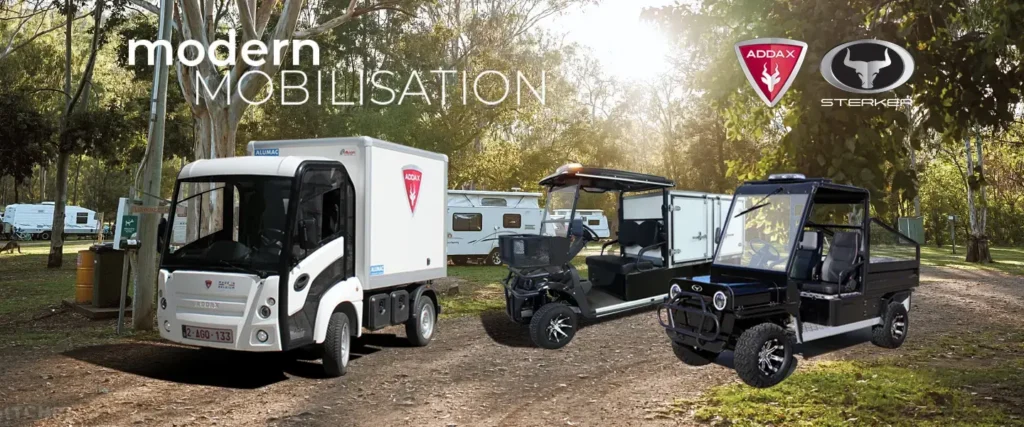
At Conquest, we carry leading electric models like the Sterker Gladiator, Sterker Apache, and Sterker Wild Warrior, known for their durability, performance, and versatility.
Whether you need a cart for industrial use or a vehicle for recreational purposes, we have a model in stock that fits your requirements.
Get in Touch with Conquest
Ready to experience the benefits, power, and beauty of electric carts? Conquest is here to help you find the perfect cart for your needs. Contact our team today for tailored advice or to book a test drive and find your ideal UTV.