This article was originally published by EcoPower, now proudly integrated into Conquest. By combining our expertise, we deliver best-in-class electric industrial cleaning, maintenance, and agricultural transport solutions, all backed by nationwide servicing, expert support, and a single trusted name
Whether you’re managing a council fleet, running a landscaping business, overseeing a warehouse or farming a few hundred hectares in Australia, choosing the right light commercial vehicle (LCV) is one of the most important operational decisions you’ll make. The right LCV improves productivity, reduces operating costs, and keeps your team moving safely.
This guide covers the core information you need to know, including: what a light commercial vehicle is, the main types of light trucks available, how to compare them for commercial and agricultural use, and why a growing number of Australian businesses are switching to electric LCVs.
What is a light commercial vehicle?
A light commercial vehicle is designed primarily to carry goods, equipment or a small number of passengers for business purposes. In Australia, LCVs sit in a weight class below heavy goods vehicles (HGVs), making them accessible for most standard driver licences and easier to operate in urban, campus and agricultural environments.
The term covers a broad family of vehicles, from enclosed cargo vans and flatbed light trucks through to electric utility carts built for on-site and agricultural tasks. What they all share is a balance of manoeuvrability, payload and running cost that makes them the practical backbone of commercial and farm operations.
Types of light commercial vehicles
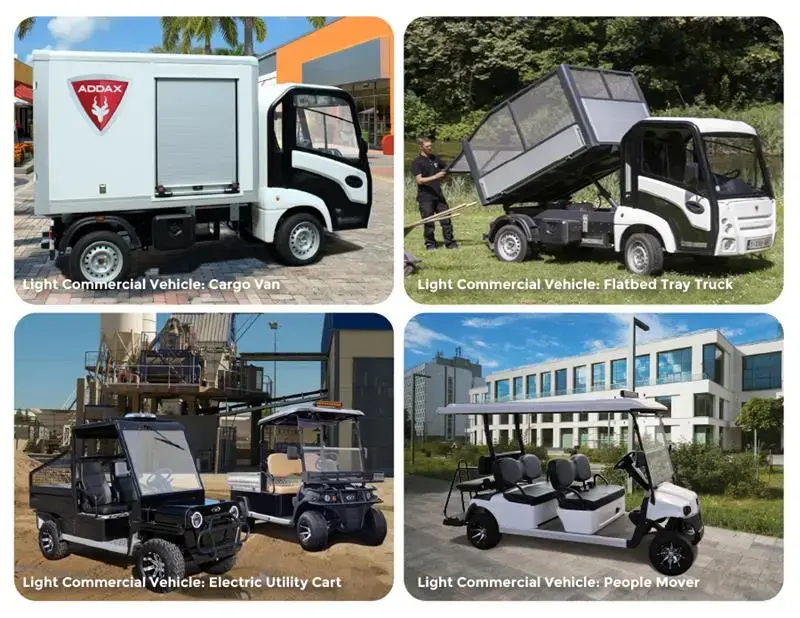
Understanding the main types of light trucks and LCVs helps you match the right vehicle to your specific work requirements. Here are the primary categories and when each is the stronger choice.
Cargo vans
Enclosed cargo vans prioritise volume and weather protection for the load. The enclosed body keeps tools and stock dry and secure, making them best suited for: trades, couriers, mobile services, and urban deliveries.
Flatbed and tray light trucks
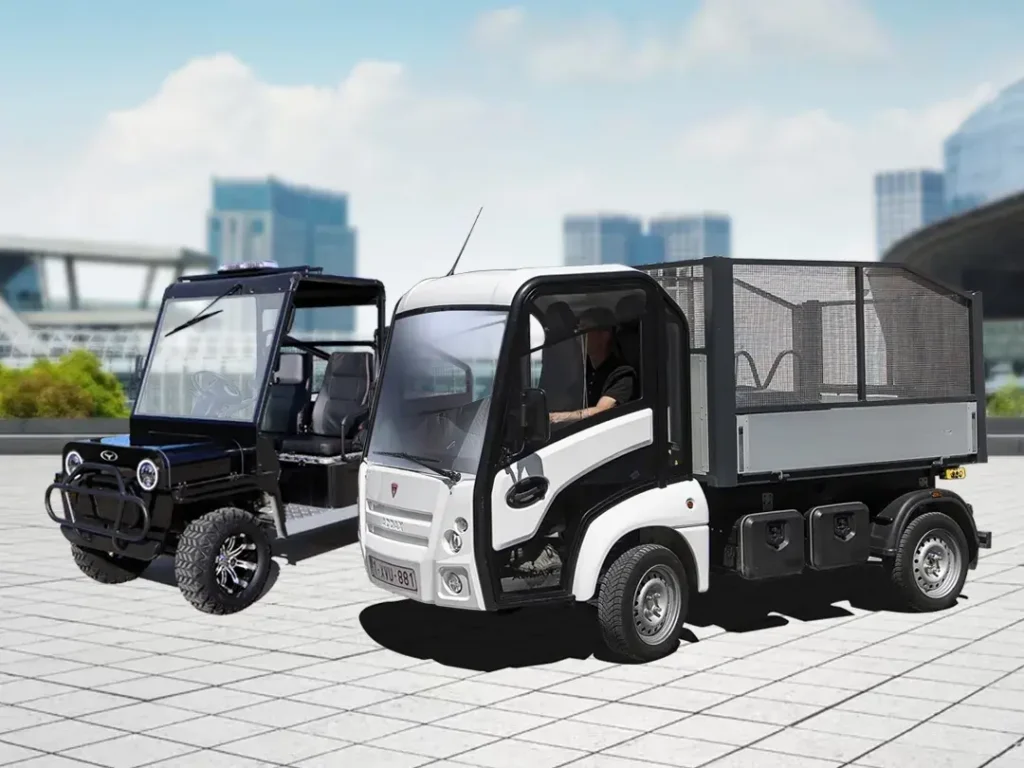
Flatbed and tray light trucks offer an open, versatile cargo area that can carry oversized or irregularly shaped loads that a van cannot accommodate. These open-bed trucks are suited for: landscaping, construction, agriculture, and councils.
Utility carts and electric LCVs
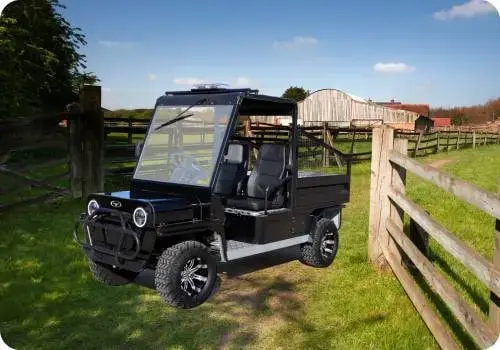
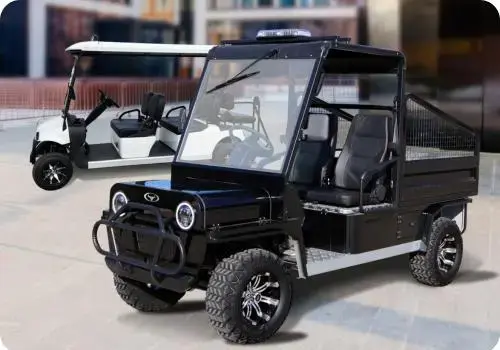
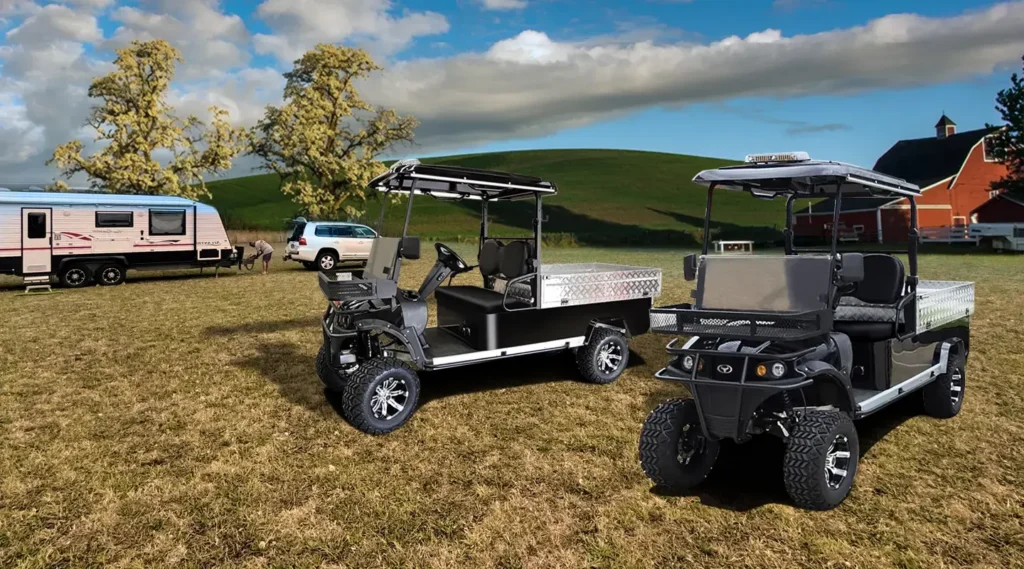
Designed for carrying people and equipment across diverse routes and terrain, these electric light trucks combine strong payload and towing capability with zero tailpipe emissions and very low running costs. Light utility vehicles are best for: government, industrial facilities, agriculture, warehousing, health campuses, and outdoor venues.
People movers and passenger LCVs
Some LCV platforms support multi-passenger configurations, from 2-person utility cabs to 6-seater people movers, supporting safe, comfortable and efficient transport of crews, personnel, or visitors across vast sites. People moving LCVs are best suited for: resorts, health and aged care, educational institutions, festival venues and stadiums.
How to choose the right LCV for your operation
The right commercial light truck is the one that fits your actual duty cycle — not just on paper, but across a full working day in your specific environment. Work through these key criteria before committing to a model:
1. Payload and towing requirements
Calculate your typical load weight and whether you regularly tow trailers, equipment or implements. Light duty commercial trucks in Conquest’s range are suited for different payloads depending on model:
- Up to 500 kg payload: Sterker Wild Warrior, Apache, Gladiator
- Up to 1,000 kg: Addax MT, MTX, MTN
All of these brands also offer towing capacities of up to 1,200 kg braked. These payload and towing ranges are sufficient for most commercial and agricultural towing requirements, however, it’s crucial to assess the ratings against your actual requirements to ensure you specify the right vehicle for your needs..
2. Operating environment and terrain
Consider the surfaces your LCV will work on daily. Will it navigate narrow industrial corridors, tight warehouse aisles or city laneways? Or does it need high ground clearance for paddocks, gravel tracks and uneven terrain?
The Addax MTN and MTX feature 1.40 m width and are engineered for confined urban and industrial environments, while the Sterker Wild Warrior feature 300 mm ground clearance, with 40% gradeability and are purpose-built for demanding all-terrain use.
3. Range and duty cycle
Understanding how far your vehicle travels in a shift and whether overnight charging is practical is essential for ensuring the vehicle you choose will hold up over realistic shifts.
Electric LCVs in Conquest’s range offer between 60 km and 180 km of range per single charge cycle depending on model, load and terrain. The Sterker Wild Warrior also offers an optional range extender generator for extended remote operations where charging infrastructure is limited.
4. Configuration and body type
Consider what body configuration your work demands, for example, do you need a flatbed, tipper, enclosed cargo bed, refrigerated container, people mover, or a resort/cleaners cart?
Conquet’s electric LCV range can be custom configured across all these formats, allowing you to specify a utility vehicle that arrives work-ready rather than requiring aftermarket modifications, ensuring ultimate productivity from day one.
5. Total cost of ownership
Look beyond the purchase price for overall, long-term cost effectiveness. Electric light commercial vehicles can carry a higher upfront cost, but they have significantly lower operating and maintenance costs than petrol or diesel equivalents over their lifetime. Fewer moving parts means less servicing, while electric battery operation means no fuel bills. And in many cases, electric vehicles can be eligible for government fleet sustainability incentives which can help to bring upfront costs down also. Conquest vehicles also come with a 5-year battery warranty, providing long-term cost certainty and peace of mind.
Light commercial vehicles across key industries
The right LCV depends heavily on the sector you operate in. Below is a practical snapshot of how electric light trucks and utility vehicles are deployed across various Australian industries.
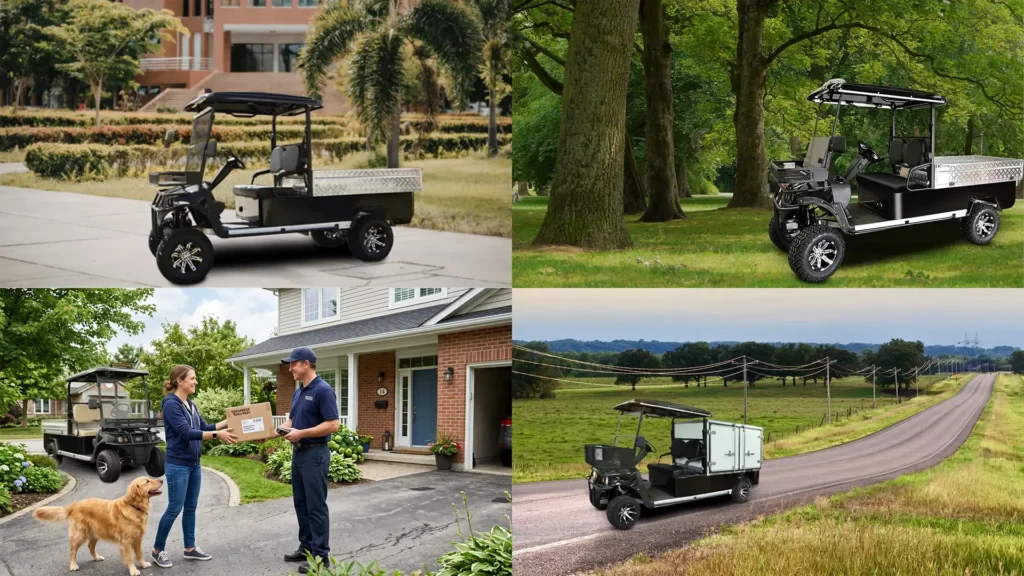
Governments and municipalities: Councils all over Australia use electric LCVs for parks maintenance, waste collection runs, asset inspection and event logistics.
Agriculture and horticulture: Electric light commercial farm vehicles cover daily orchard, vineyard, paddock and shed runs with lower noise impact on livestock and no exhaust fumes for safer operations in enclosed spaces.
Facilities management: Facilities teams rely on customisable electric LCVs fitted with shelving, storage compartments, power outlets and USB ports to carry tools, supplies and waste across large campuses in a single, efficient circuit.
Transport and logistics / last-mile delivery: Electric LCV trucks are an increasingly popular choice for final-kilometre delivery routes where fuel costs and emissions compliance are under scrutiny.
Mining and resources: Robust electric light commercial vehicles handle personnel and equipment transport on mine sites and resource operations. Electric powertrains reduce underground emissions and the fire risk associated with fuel storage.
Venues, stadiums and resorts: People mover and cargo LCV configurations support fast, silent guest transport, back-of-house logistics and groundskeeping without disrupting guests or events.
Health and aged care: Quiet, emission-free operation makes electric LCVs the natural choice for patient, resident and staff transport within health campuses and aged care facilities. Wheelchair ramp configurations are also available to support simple transport.
Educational institutions: Universities, schools and colleges use electric LCVs to move supplies, equipment and mail across campuses — reducing the number of private vehicles on site and improving pedestrian safety.
Choosing your electric LCVs with Conquest
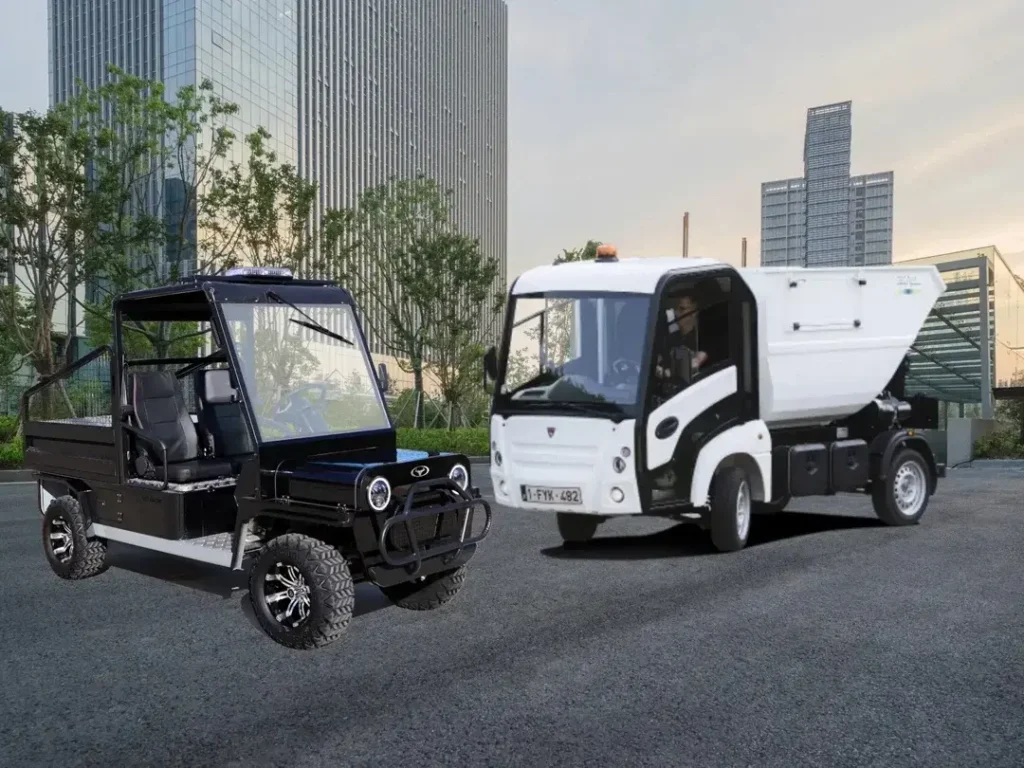
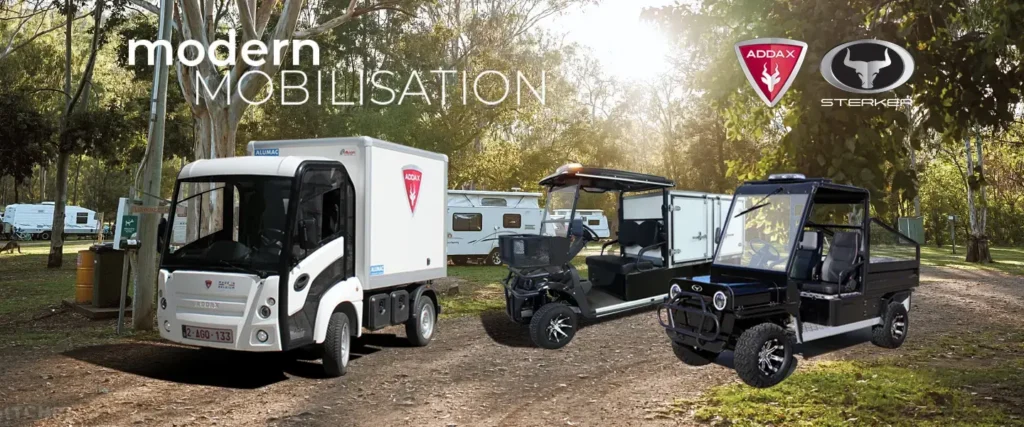
Conquest supplies two purpose-built electric LCV brands — Sterker and Addax — covering a broad range of commercial, industrial and agricultural applications. Available with Australian support from locations in Adelaide, Brisbane, Melbourne, Perth and Sydney.
Customisation from the factory
Conquest electric LCVs can be configured to your operational spec before delivery, including adding trays, cages, enclosed bodies, towbars, refrigeration, branding livery and safety equipment. This removes the need for costly aftermarket body builds and delivers performance from day one.
5-year battery warranty
Conquest backs every battery with a 5-year warranty, so you can trust your vehicle will perform highly long-term. The batteries are also ethically sourced, and recyclable, providing long-term cost certainty and supporting your ESG reporting.
Remote diagnostics and uptime
Conquest’s Addax vehicles include 4G remote battery diagnostics that allow fleet managers to monitor battery health, usage and charge status in real time, reducing unexpected downtime and enabling proactive maintenance scheduling.
FAQs about light commercial vehicles
What are the different types of light trucks?
The main types of light trucks in commercial use are: enclosed cargo vans (high volume, weather-protected loads), flatbed and tray trucks (oversized or bulk loads, agriculture, construction), electric utility carts (on-site, campus and farm operations), and people movers (passenger transport at venues, campuses and health facilities).
Conquest’s range of light utility vehicles covers flatbed, tipping tray, enclosed cargo, refrigerated, and people mover configurations across the Sterker and Addax brands.
How much can a light commercial vehicle carry?
Payload varies by model. Conquest’s Sterker models (Wild Warrior, Apache, Gladiator) carry up to 500 kg of payload and tow up to 1,200 kg braked. The Addax MT, MTX and MTN carry up to 1,000 kg of payload and tow up to 1,200 kg braked, making them among the most capable electric LCVs in their class.
Are electric LCVs suitable for Australian farm and agricultural use?
Yes. Electric farm vehicles and utility carts are well-suited to Australian agricultural conditions. Models like the Sterker Wild Warrior offer 300 mm ground clearance, 40% gradeability, up to 180 km of range, and an optional range extender generator — making them viable for properties without convenient charging infrastructure. Simple household socket charging capabilities also means any shed power point is sufficient for overnight top-ups.
Does Conquest provide support across Australia?
Yes. Conquest operates from five locations nationally: Adelaide (SA), Brisbane (QLD), Melbourne (VIC), Perth (WA) and Sydney (NSW). The team supports test drives, authorised servicing and maintenance, parts supply, and new vehicle procurement across all states.
Ready to trial an electric LCV?
Book a test drive or request a tailored quote. Our team will help you compare models, total cost of ownership and charging options, so you can deploy the right electric LCV fleet with confidence.